Milwaukie homes built from the 1950s through 1970s often have rigid metal duct runs that collect fine silt from the surrounding clay-heavy soils and fine dust from the Willamette Valley. During the long rainy season, temperature swings between heated indoor air and cooler crawl spaces or attics cause condensation inside the ducts, allowing mold to take hold on the interior surfaces. Furnace and duct cleaning here requires removing both the dry particulate and the moisture-trapped residue without pushing spores into living spaces.
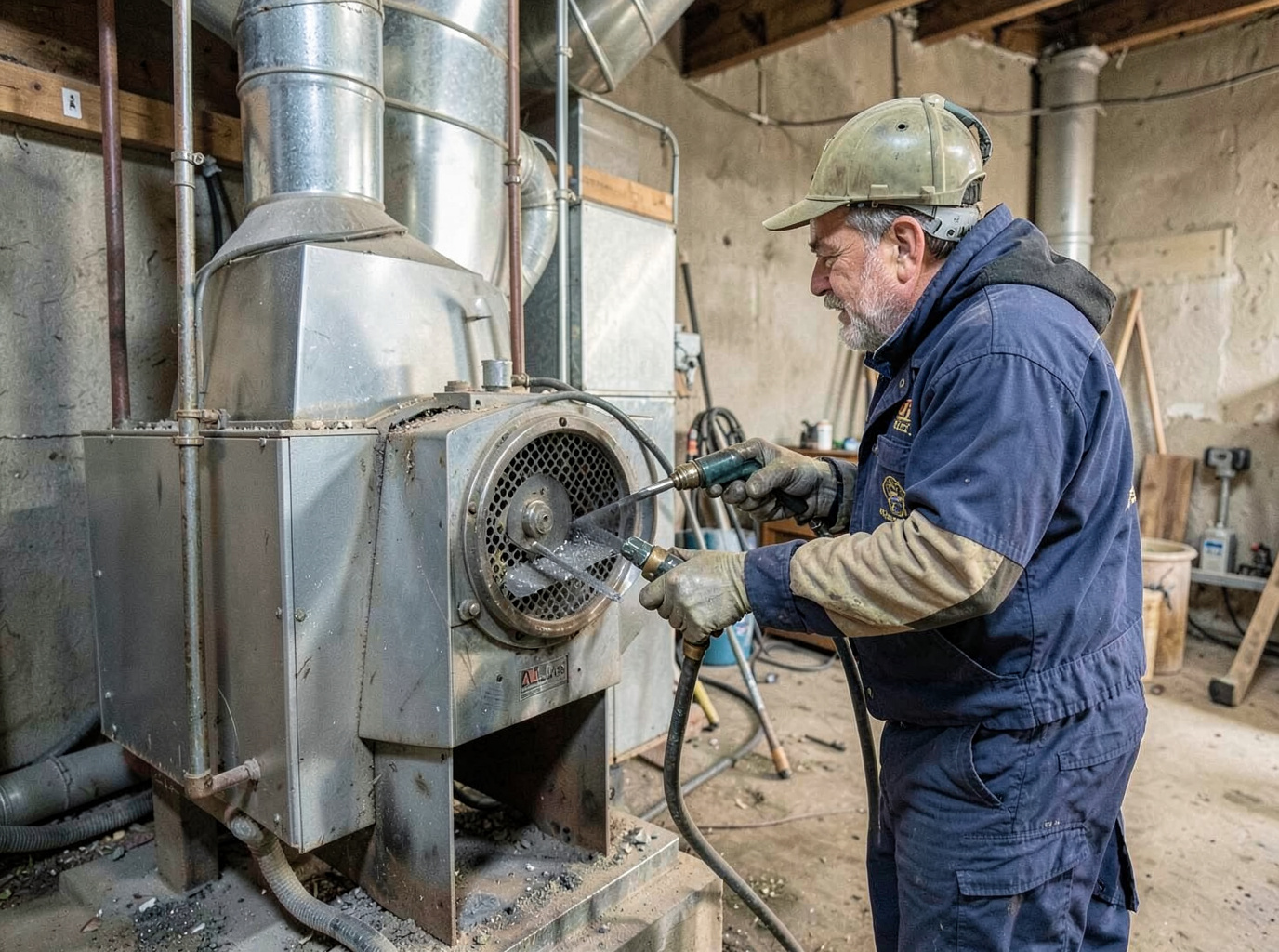
Standard residential furnaces in this area run on natural gas with returns that frequently pull air from laundry rooms or unfinished basements. Over years, lint, pet hair, and construction debris from nearby remodels accumulate at elbows and transitions. A proper cleaning uses negative-air machines staged at the main trunk combined with agitation tools sized for 6-inch to 12-inch ducts common in these homes. Skipping the furnace blower housing or failing to seal off supply registers allows contaminants to recirculate once the system restarts.
Homeowners in the Oak Grove and Hector Campbell neighborhoods sometimes notice musty smells only after the first cold snap when the furnace cycles more often. That timing coincides with increased humidity trapped in the ducts from fall rains. Cleaning at that point prevents spores from being distributed through the house and restores proper airflow that older single-speed blowers struggle to maintain when passages are restricted.
Seasonal Timing Guidance
Schedule furnace and duct cleaning in late summer or early fall before the heating season begins. This avoids pushing damp material through the system during peak use and lets the ducts dry thoroughly after cleaning before constant furnace operation starts.
Technician insight
In Oregon, the thing that catches most people out with furnace and duct cleaning is how our extended rainy winters push moisture into the return ducts of 1960s and 1970s Milwaukie homes, turning ordinary dust into mold colonies that standard filter changes never touch.
Musty Odor After First Cold Snap
A Milwaukie homeowner noticed a persistent smell when the furnace kicked on each evening. Inspection revealed heavy dust and visible mold film inside the return trunk located in the damp crawl space. We isolated the system, performed full negative-air extraction on all runs, and cleaned the blower assembly. Airflow improved and the odor disappeared once the furnace resumed normal operation.
How it works
- 1
Initial System Inspection
Technician maps all supply and return runs, checks furnace blower compartment, and identifies access points in Milwaukie crawl spaces or attics.
- 2
Negative Air Setup
Machine is connected to the main trunk and creates containment so loosened debris moves only toward the collection point rather than into living areas.
- 3
Agitation and Extraction
Rotating brushes and compressed air tools dislodge buildup while the vacuum removes material; returns and supplies are cleaned separately.
- 4
Furnace Component Cleaning
Blower wheel, housing, and accessible heat exchanger surfaces are vacuumed to remove lint that restricts airflow.
- 5
Final Verification
Registers are opened, system is run, and airflow is checked to confirm no residual debris remains in the Milwaukie home's duct network.
Pricing
Cost depends on number of runs, furnace accessibility, and whether mold remediation is needed; upfront quotes provided after inspection.