
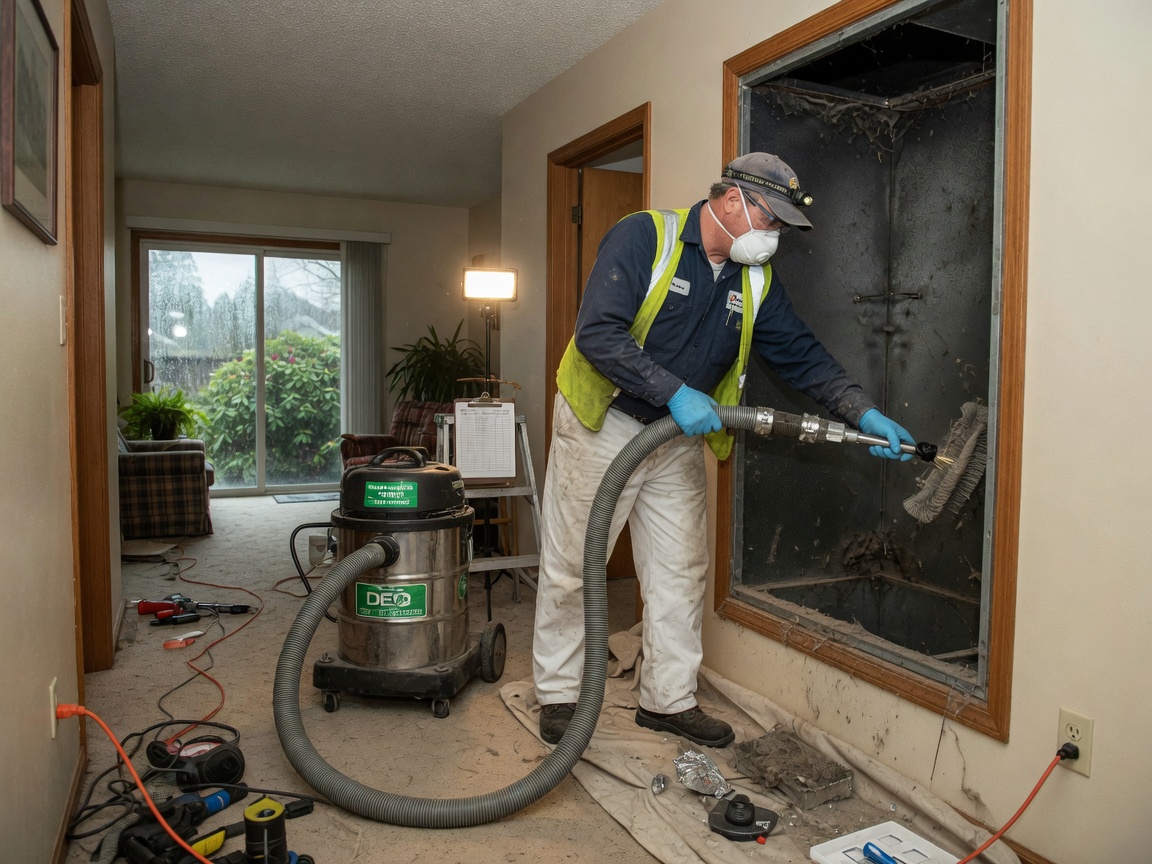
Milwaukie homes built from the 1950s through the 1970s often feature original sheet-metal duct runs that travel through crawl spaces and attics exposed to the region's frequent winter rain and high humidity. Over time, fine silt from nearby Willamette River flooding events and pollen from surrounding Douglas fir stands collect inside these ducts, restricting airflow and recirculating allergens during heating season. PureStream Vent uses negative-air machines and rotary brushes sized for these older rectangular trunks rather than flexible lines common in newer Portland subdivisions.
Damp Oregon winters create condensation points where ducts pass near exterior walls or uninsulated floor joists, allowing moisture to mix with accumulated dust and form visible mold streaks. Technicians inspect each register and the main plenum for these conditions before cleaning, then apply EPA-registered antimicrobial only when growth is confirmed rather than as a blanket treatment. This approach prevents unnecessary chemical use while addressing the actual source in Clackamas County homes that lack modern vapor barriers.
Access limitations in split-level Milwaukie properties and ranch houses along 99E require technicians to remove multiple register boots and sometimes cut small inspection ports that are later sealed to code. The 24/7 availability at 10100 SE Main St lets crews respond quickly after heavy wind events that drive additional outdoor debris into exterior intakes. Post-cleaning airflow is verified with anemometer readings at each supply to confirm restoration without guessing.
Homeowners in the area frequently overlook how pet dander and cooking grease combine with the fine volcanic soil dust common in the region, creating a sticky film that standard household vacuums cannot reach. Professional equipment reaches the full length of the return and supply runs, including the furnace blower compartment that many DIY attempts miss entirely.
Technician insight
In Oregon, the thing that catches most people out with Residential Air Duct Cleaning is how crawl-space ducts in 1960s Milwaukie homes stay damp all winter from poor grading and lack of vapor barrier, turning ordinary dust into mold that spreads every time the furnace kicks on.
Hidden mold in a Johnson Creek ranch
Residents reported musty odors when the heat ran. Inspection revealed standing moisture along the main trunk where it crossed a low spot in the crawl space near Johnson Creek. After removing the moldy insulation and cleaning the ducts with containment, the odor disappeared and the system maintained dry conditions through the next wet season.
How it works
- 1
Initial Inspection
Technicians examine all accessible ducts, registers, and the furnace compartment to map the system layout and note moisture or debris issues typical in older Milwaukie construction.
- 2
System Isolation
Registers are sealed and a negative-air machine is connected to contain dust during cleaning, protecting living spaces from redistributed particles.
- 3
Mechanical Cleaning
Rotary brushes and compressed-air whips dislodge buildup from sheet-metal trunks and flex lines while the vacuum collects debris at the source.
- 4
Final Verification
Each supply and return is checked for restored airflow, and the system is returned to normal operation with all access points resealed.
Pricing
Cost depends on number of runs, access difficulty, and whether moisture remediation is required; upfront quotes provided after inspection.